The lake that nearly choked: the story as a comic strip
In the 1950s, Lake Annecy was turning murky. Nine panels to understand, with Lou and Malo, how it was saved and why its water is so clear today.
-

Malo says You can see the pebbles right at the bottom!
Lou says Has this lake always been this clean?
-
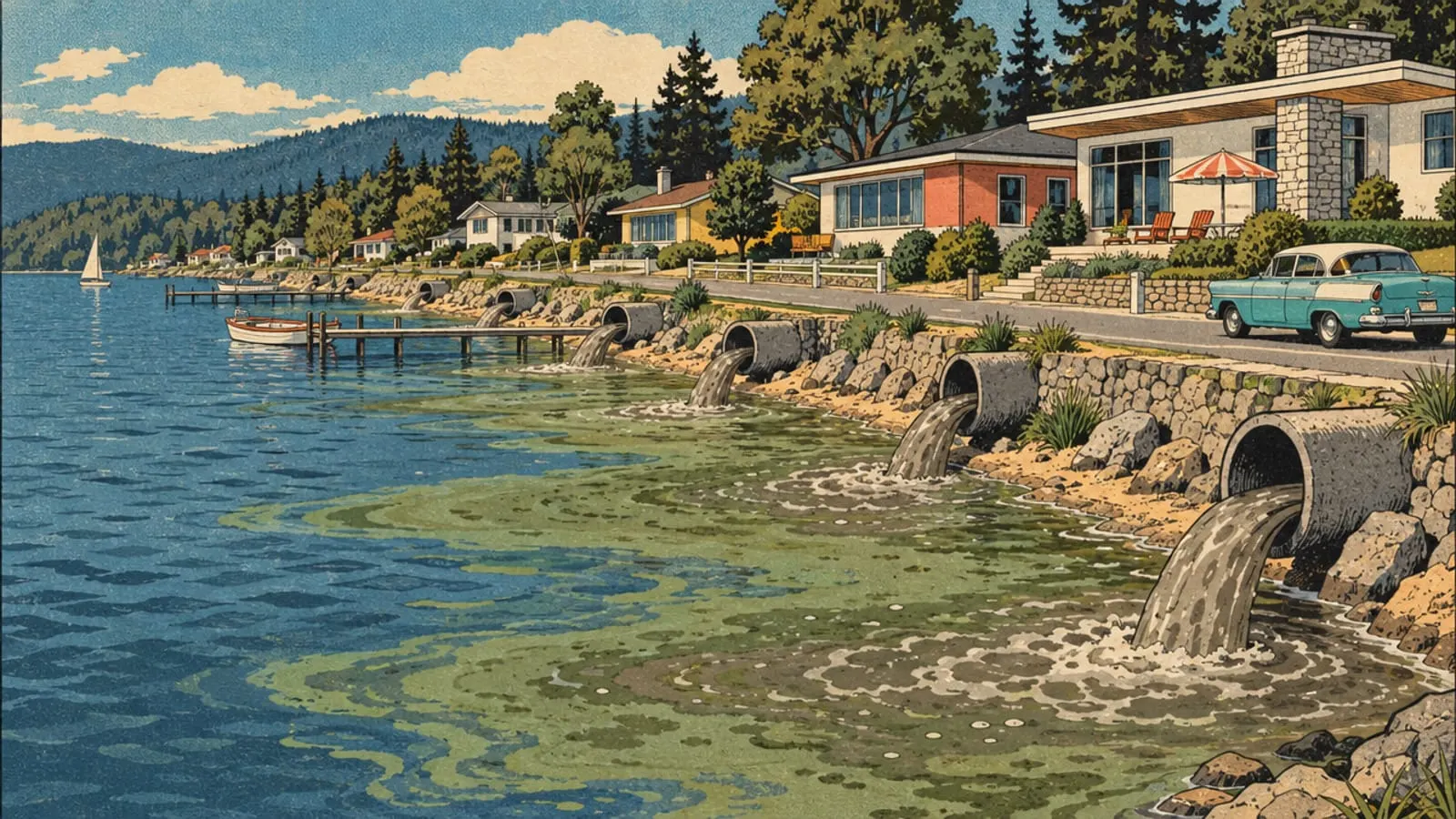
Not at all! In the 1950s, the houses along the shore pour their dirty water straight into the lake. The water quality gets worse.
-
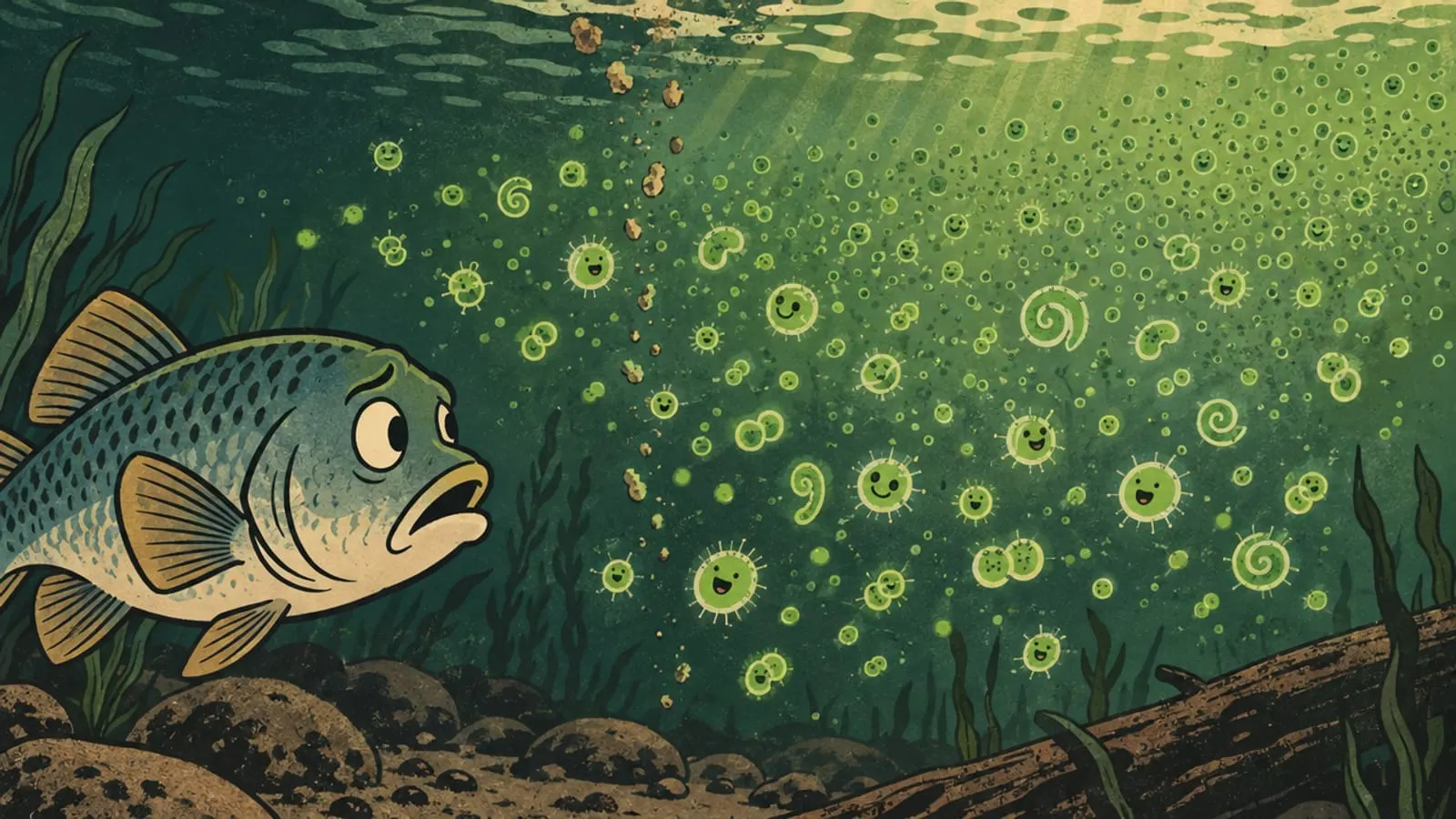
That water feeds tiny algae, which multiply. The lake turns green and murky: this is called eutrophication.
-
A professor and a doctor raise the alarm, and the mayor of Annecy listens. On 15 July 1957, eight towns around the lake join forces to save it: SILA is born.

-
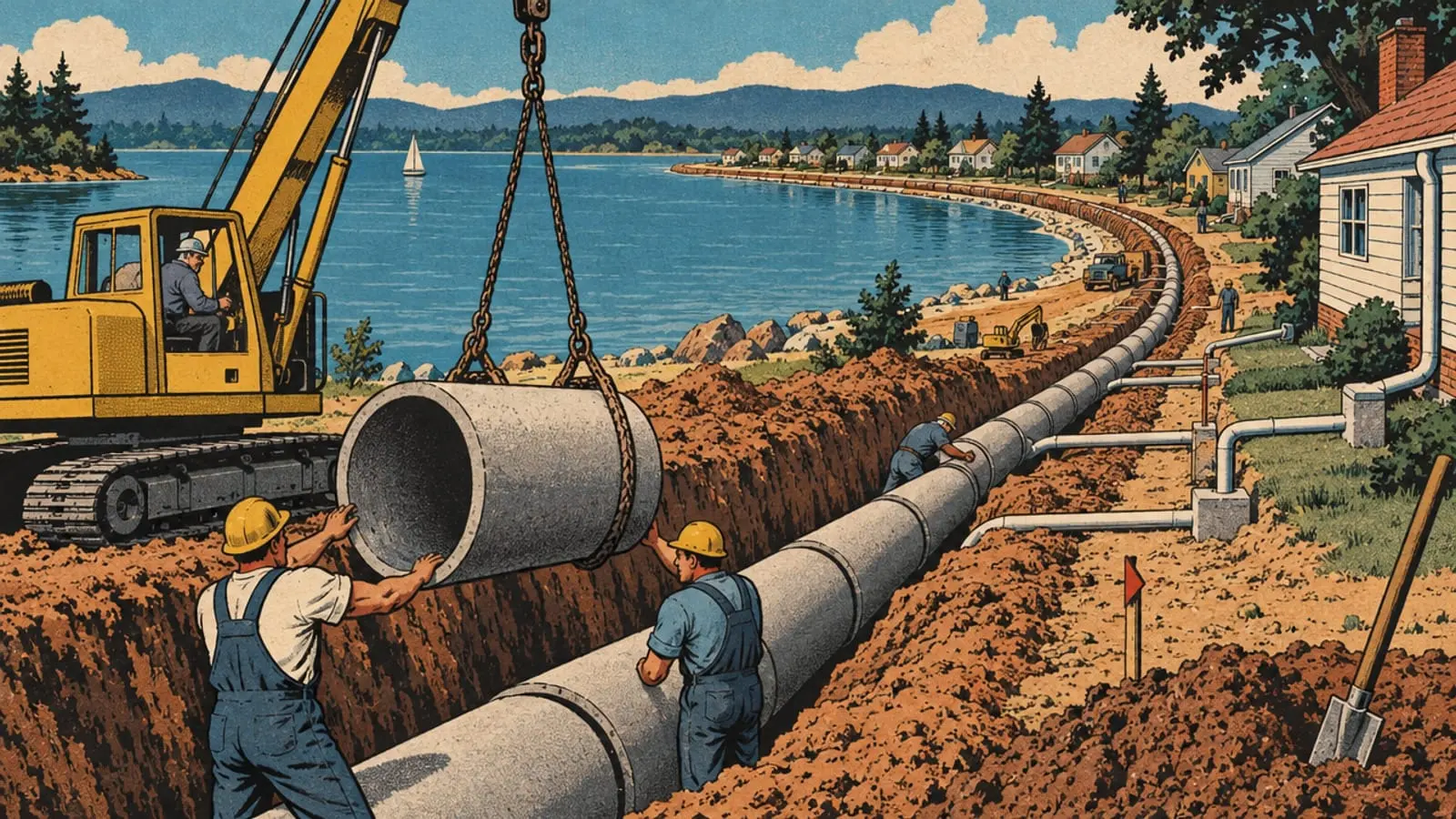
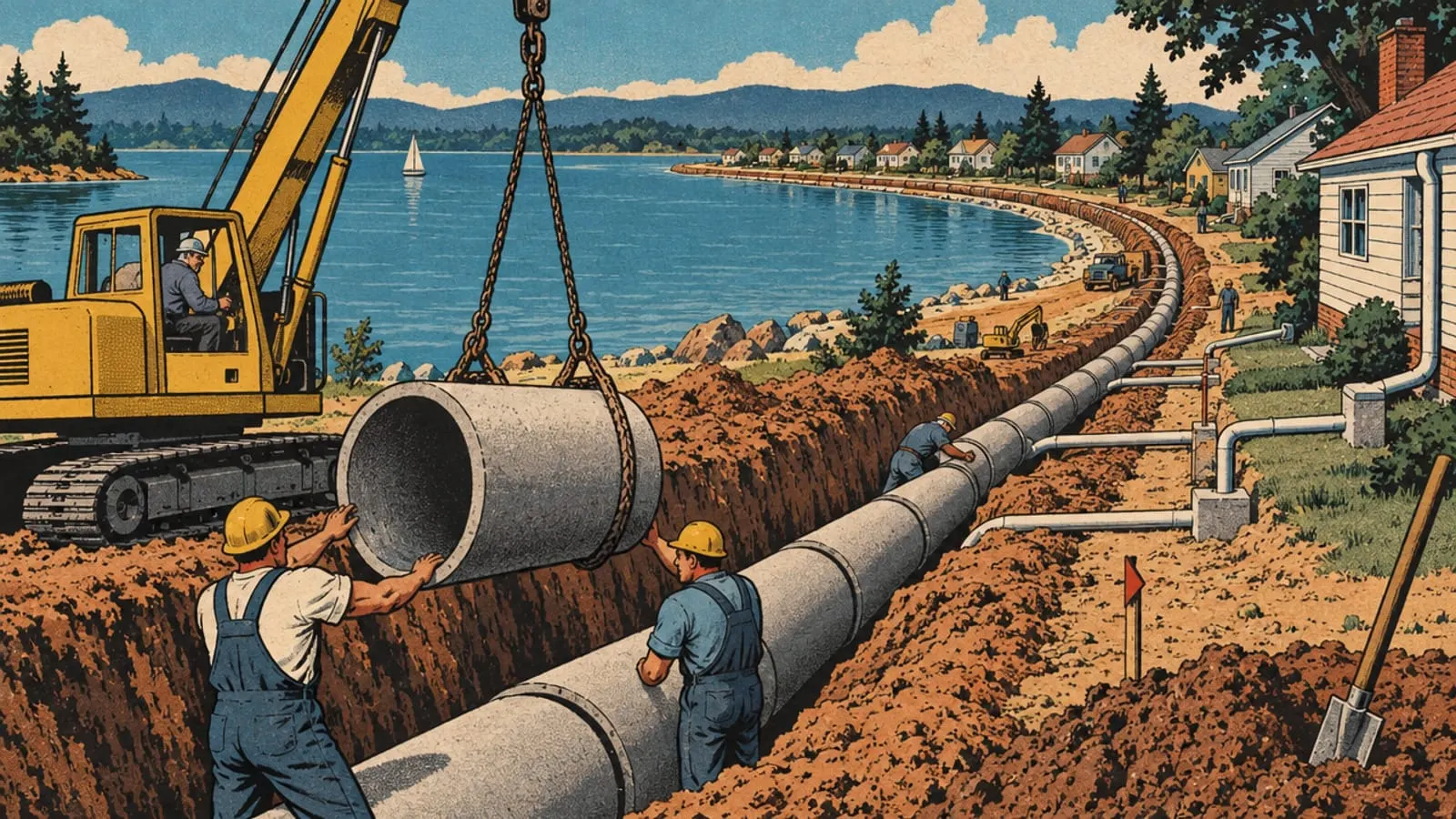
From 1961 to 1976, a great pipe is built all the way round the lake. It catches the dirty water before it reaches the lake.
-
The pipe carries that water away from the lake to a treatment plant built downstream, at Cran-Gevrier. Since 1997, the Siloé plant has done the cleaning.
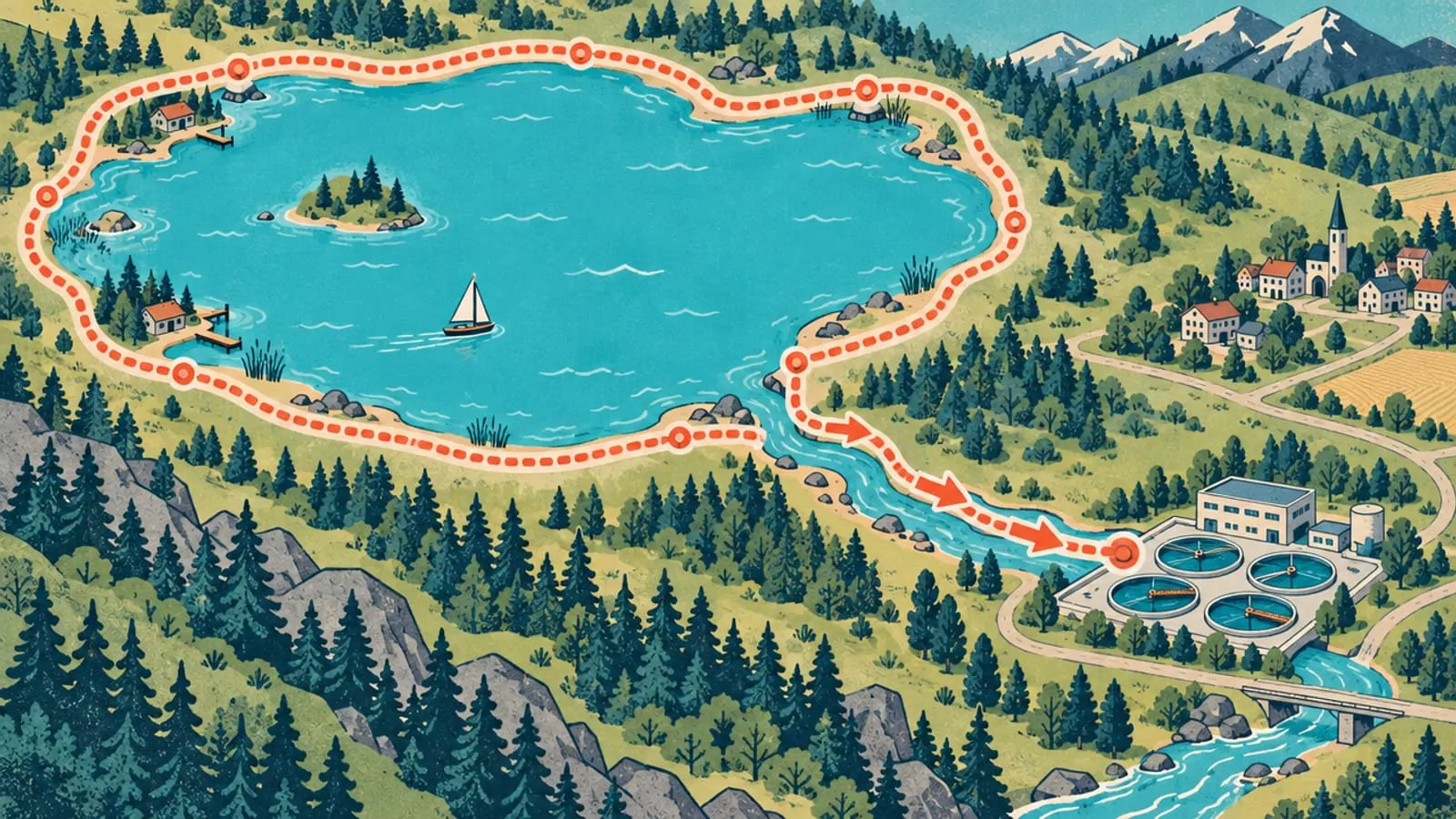
-
Since 1966, scientists have kept watch over the lake. They measure how clear it is with a black-and-white disc, lowered until it disappears.

-
It worked! Today, the measurements rate the lake water as “very good” for clarity and nutrients.
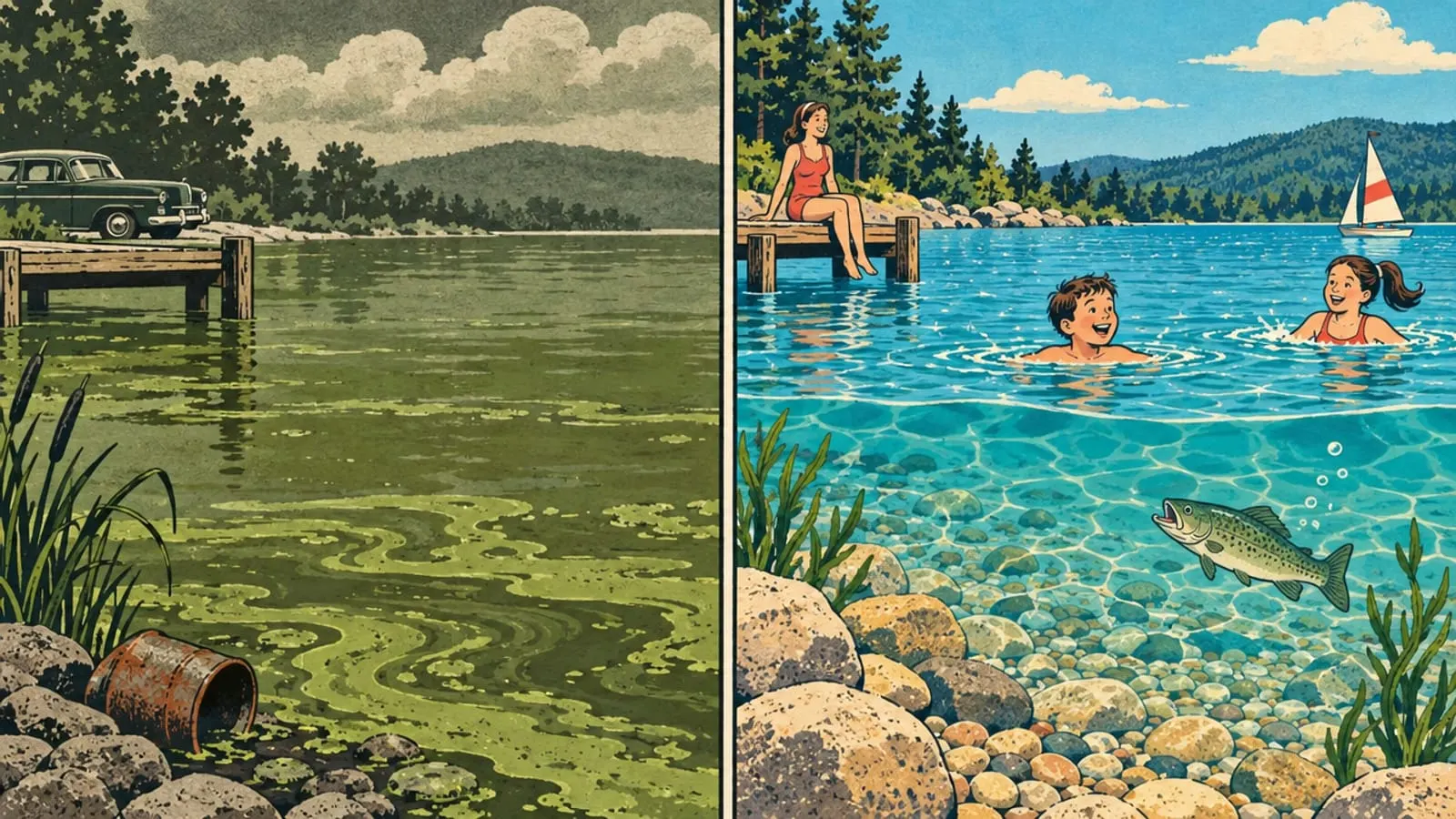
-
The lake isn’t clean by magic: people keep protecting it, every day.

Lou says So it’s all thanks to a giant pipe?
Malo says And to people who decided together!
A story in nine panels to understand why Lake Annecy’s water is so clear today. It takes two minutes to read, from about age 7.
For grown-ups: what the records say
The alarm was raised by Professor Hubault and Dr Paul-Louis Servettaz, and taken up politically by Charles Bosson, mayor of Annecy. On 15 July 1957, eight towns on or near the lake set up an inter-municipal body: the forerunner of today’s SILA.
The wastewater collectors were built around the lake from 1961 to 1976. The water is carried to a treatment plant downstream of the lake, at Cran-Gevrier, replaced in 1997 by the Siloé plant.
Scientific monitoring of the lake began in 1966, prompted by “the first signs of eutrophication”, according to the SILA-INRAE report. In 2023, nutrient levels in the surface layer stayed below the “very good status” threshold, and clarity stayed above the “very good ecological status” threshold.
To go further: why the lake water is so clear, the long version of this story, and how the lake was born, Lou and Malo’s other comic.
Sources
Read next
Around Lake Annecy →
How was Lake Annecy born? The story as a comic strip
Twenty thousand years ago, the valley lay under ice. Nine drawn panels to understand, with Lou and Malo, how Lake Annecy came to be.

Lake Annecy facts and figures: size, length, altitude, depth
27 km², 14.6 km long, 447 m above sea level, 41 m deep on average: Lake Annecy’s dimensions from the body that manages it, and what they mean for you.