The Château de Menthon-Saint-Bernard: A Thousand Years, One Family
Home to the Menthon family since the 11th century, built from the 12th to the 19th, open to visitors in summer: the castle overlooking Lake Annecy's east shore.
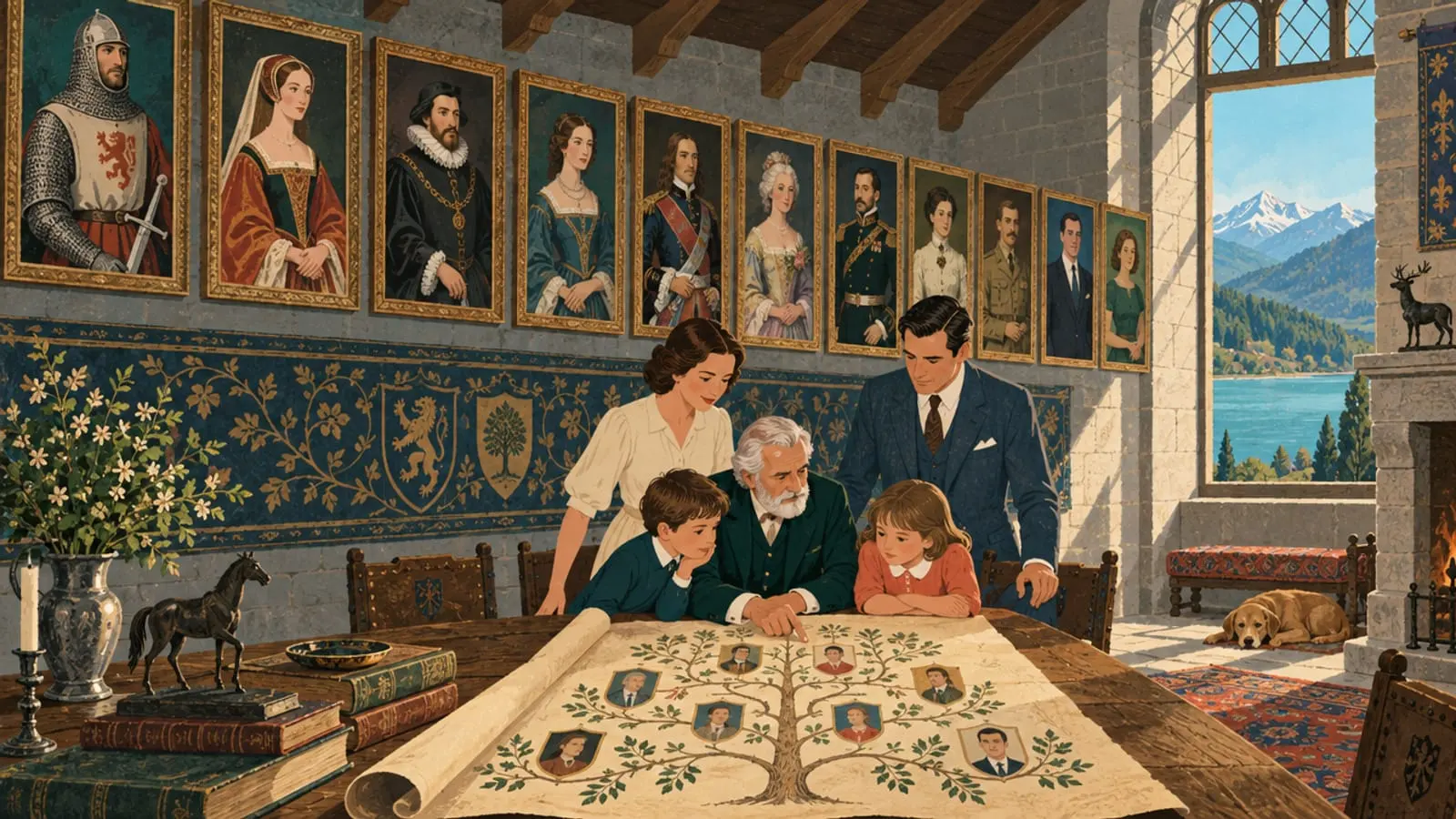
On the east shore there is a castle you photograph from the water — Duingt’s — and a castle you visit: Menthon-Saint-Bernard, set on its rock above the village. What makes it singular is not its silhouette, spectacular as it is. It’s the continuity: the same family has lived here since the 11th century, more than twenty generations, without a sale or a break.
A thousand years of permanent building site
The castle tells the region’s history in layers. A medieval fortress first, built from the 12th century to watch the shore and the lake road. A stately residence next, as war receded: battlements became windows, halls filled with furniture. A romantic reinvention finally, in the 19th century, when René de Menthon redrew the whole in the taste of the age — turrets and steep roofs included.
It’s the same movement that transformed the whole region, from Annecy’s comital castle to the villages along the shore: military Savoie become Savoie of leisure.
Saint Bernard, the ancestor of the summits
The village’s name is not decorative: tradition ties the family to Saint Bernard of Menthon, founder of the alpine hospices of the Great and Little Saint Bernard passes — the patron saint of mountaineers, whose dogs still carry the name. A thousand years on, the house claims that lineage, and the castle keeps the memory and relics of that alpine story.
The visit: a home, not a museum
The castle is open from May to September, in the afternoons — and it is a visit to a lived-in house: library, furnished bedrooms, kitchens, objects that have never left the premises. You don’t file through white rooms behind glass; you step into someone’s home, whose family happens to have occupied it for a millennium.
In summer, the tourist office also schedules theatrical night tours — we relay them in the calendar when they return: the castle acted out at nightfall, rather than narrated.
And the Disney legend?
You will inevitably be served it: the Château de Menthon is said to have inspired the Sleeping Beauty castle. It is a local legend with no documentation — no serious source establishes it. The silhouette is enough to explain the rumour, and the visit doesn’t need it: a thousand years of real history beats an animation anecdote.
What we wouldn’t do
- Come in the morning. Visits run in the afternoon, in season — check days and times before driving up.
- Confuse it with Duingt. Duingt is private and admired from the water; Menthon is visited.
- Skip the village. Menthon has its beach, its lanes and the Roc de Chère at its door — the castle crowns a half-day, it isn’t a drive-by.
- Serve the Disney legend as fact. Tell it for what it is: a charming rumour.
A lived-in castle is a rare species: neither ruin nor museum, but a house that is a thousand years old and carries on. That is exactly the nuance worth the trip.
Frequently asked questions
- Can you visit the Château de Menthon-Saint-Bernard?
- Yes, in season: the castle is open to visitors from May to September, in the afternoons. It remains a lived-in home — which is what gives the visit its character.
- Who lives in the Château de Menthon?
- The same family since the 11th century: the Menthons, more than twenty generations. The castle has never been sold.
- Did the Château de Menthon inspire Disney?
- It's a widespread local legend — charming but undocumented. Its fairy-tale silhouette is enough to explain the rumour: turrets, steep roofs and a perch above the lake.
Sources
Read next
History & culture of Annecy →
The Annecy Festival: How the Town Became the World Capital of Animation
Since 1960, every June, Annecy hosts the world's biggest animated film festival. Its history, what it changes in town, and how to enjoy it without a badge.
Why Annecy Is Called the “Venice of the Alps” (and What the Nickname Misses)
Canals, flowered bridges, the Palais de l'Île: where the “Venice of the Alps” nickname comes from — and why the comparison misses the best part: millraces.